Tuesday, October 11, 2011
Two experimental dals
Monday, August 1, 2011
Weird corn salad
This next salad was based on the fact that corn was on sale and I love fresh corn. One can make all sorts of great corn salads that are more or less bean-y and more or less salsa-ish. I wanted to do something different. It ended up tasting good because all of the components were good but it is not all the way there yet.
3 ears corn (these were smallish)
1/2 lb eggplant
14 grape or cherry tomatoes quartered
15 mint leaves finely chopped.
1/2 lime
Cook the corn. Cut it off the cob and let cool.
Slice eggplant and salt. Let sit for about 20 minutes. Rinse and then dice. Fry in oil. Put between paper towels to remove oil and let cool.
When cool combine the ingredients and squeeze the lime over the top.
Lessons:
Ev suggested removing the eggplant. She did not think that its texture worked. She also suggested adding black beans and avocado and maybe some basil. This would end up as a take on the classic bean-y corn salad with mint and basil in place of cilantro and grape tomatoes instead of usual tomatoes. It would probably be pretty good (classics get that way for a reason).
I, however, want to go big. Ditch the tomatoes (too acidic). Roast (or grill) the diced eggplant. Juice the lime separately and add honey to it. Add some diced chicken. I still feel like it needs something else. Can you help me?
We have not tried either of these variations.
Wednesday, September 29, 2010
Boozy fruit, an experiment (part 1)
The basic idea seems to be 1 pound of fruit, 1/2 cup of sugar, booze (at least 40% alcohol by volume) to cover, and 4-12 weeks of macerating time. I stared at my liquor shelf and came up with three combinations I wanted to try: gin and cucumber, strawberry and tequila, and plum or apricot and kirschwasser, which is a cherry brandy.
I went to the store and bought a pound of cucumbers, a pound of strawberries, three plumcots and three plums. I also picked up more gin (I didn’t want to use the good stuff for this experiment) and some regular brandy because I didn’t have enough kirschwasser, and the corner liquor store didn’t have it. I didn’t have any quart-size jars, and each pound of fruit makes about a quart, so I just used two smaller jars for each batch. This also gave me the opportunity to experiment with flavorings.
Tequila and strawberries
I paired these two because strawberry margaritas exist and are tasty. I washed the strawberries, cut the stems off, cut large ones in half, and cut all the soft or bad spots off. I figured bad spots would not fare well sitting in a cabinet for months. I divided the strawberries into two jars and added some lime zest to one of them. I added 1/4 cup sugar to each jar and filled with tequila.
Brandy with plums and plumcots
I picked this pairing because one of the recipes was in this vein and I had some kirschwasser I never used. I wasn’t really sure which stone fruit to use, cherry, apricot, or plum, but plums and plumcots were on sale at the store, so I went with those. I washed the fruit and poked it all over with a needle as advised in one of the recipes I had seen. I put the three plums into one jar and the three plumcots into another. To the jar with the plums I added 1/2 a cinnamon stick, some fragments of a nutmeg I had cracked previously, and 1/4 tsp vanilla bean paste. To the jar with the plumcots I added 1/2 cinnamon stick and 1/4 tsp whole cardamom seeds. I added 1/4 cup sugar to each jar, divided the kirschwasser between them, and filled the jars the rest of the way with brandy. The plums didn’t fit in the jars very well, so I ended up cutting one of them in half in each jar for geometry’s sake. I am interested in seeing if this changes the taste or texture.
Gin and cucumbers
I paired these two because of my favorite drink, the Gordon’s cup. I was also a excited to have a reason to use juniper berries. I received some as a gift about a year ago and hadn’t figured out a use for them yet. Using my mandoline, I sliced two cucumbers into 1/4-inch thick slices. I divided them between two jars. Into one jar I also placed 2 tsp juniper berries. Into the other I added a little lime zest and 1 tsp coriander seeds. I sprinkled 1/4 cup sugar into each jar and covered with gin.
There was a good amount of undissolved sugar at the bottom of all the jars, so I shook them around. After an hour or so of shaking every once in a while, the sugar had all dissolved.
All the fruits I used are less dense than alcohol. The plums were wedged into the jars pretty well, so they were completely submerged, but the strawberries and cucumber slices were poking up. I didn’t think that was a good idea, and I didn’t want to spend the next month rotating the jars so all the fruit would be submerged regularly, so I searched my house for ways to hold them down. I ended up putting the two halves of my tea ball into two of the jars, the top of one of our cocktail shakers into another, and an empty sample-sized glass jam jar with no label into the last one. These were just tall enough to push down the fruit so it wouldn’t be exposed to air. I hope none of them are alcohol-soluble. My life isn't very exciting; my quest to submerge fruit made me feel like MacGyver.
Tea ball to the rescue!
Having dissolved the sugar and submerged the fruit, I rinsed the jars so they wouldn’t leave sticky rings and placed them in a corner of a cabinet, the closest thing I have to a cool, dry place in my Houston apartment. Unless I get too antsy, I plan on trying them in around six weeks, which will be November 9th-ish. I’m excited. I’ll let you know how they are and what I decide to do with them. At that point, if they’re good, I can make more batches that will be ready just in time for Christmas.
Wednesday, January 20, 2010
Mustard that means it
Mustard
Makes about 1 1/2 cups.
1/4 cup whole yellow mustard seeds
1/4 cup whole black mustard seeds
1/2 cup St. Arnold's Christmas Ale or other good beer
1/2 cup malt vinegar
Pinch of salt (I might increase to 1/4 or 1/2 tsp next time)
Combine all ingredients in a glass jar and seal tightly for two days. Puree in blender until desired consistency is reached. (You won't be able to get smooth mustard this way, but you can control how grainy it is.)
Thursday, December 31, 2009
Inspiration pizza
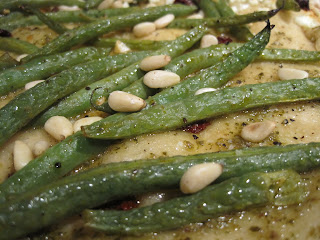
A couple weeks ago, we got home late and hungry with very little food in the house. (We were even out of parmesan-the horror!) I felt like a Chopped! contestant. We had a beer pizza crust in the fridge from a couple days before. There were also some green beans that needed to be used. I marinated them in a mixture of lemon and tangerine juice with some black pepper, smoked paprika, and chopped garlic while I rolled out the pizza dough and assembled the rest of the ingredients. I spread some extra-virgin olive oil on the dough, followed that with a hearty helping of jarred pesto. I dotted the top with sun-dried tomatoes and layered the green beans on top. I wasn't sure that the feta would be good on the pizza, so I only put it on half of it. I put it in the oven at 375 and cooked it for about 12 minutes. I sprinkled on some pine nuts and then cooked it for another few minutes. It wasn't bad at all. If I decide to make green bean pizza in the future, I will chop them smaller, but other than that it pretty much worked. The leftover green bean marinade was a nice drizzle for the top. I was impressed by my kitchen ingenuity.
Monday, October 19, 2009
Veganized Banana Bran Bread
You can probably substitute whole wheat pastry flour for the all-purpose flour with no problems. I was out, so I didn't.
1 cup all-purpose flour
1/2 cup wheat bran
2/3 cup sugar
1 tsp baking powder
1 tsp baking soda
1/2 tsp salt
1/2 tsp nutmeg, optional
1/2 cup chopped pecans or walnuts
2 tbsp ground flax seed mixed with 6 tbsp water
2-3 mashed ripe bananas
6 tbsp vegetable or nut oil
Preheat the oven to 350 F. Use shortening or oil to greast a 9x5-inch loaf pan. In a large bowl, combine the dry ingredients and mix. In a medium bowl mix together the flax mixture, bananas, and oil. Scrape into the flour mixture and stir just to combine. Pour into the prepared pan.
Bake for 50 minutes, or until a knife inserted in the center of the loaf comes out clean. Cool on a wire rack for 10 minutes before removing from the pan. If you have superhuman self-control, cool completely before slicing.
Wednesday, October 14, 2009
Experimental Indian night
Last week, we had my old roommate over for an evening of culinary experimentation and playing a card game called Rook. We would like to make "Cook and Rook" a regular occurrence. Jon made peppers stuffed with Indian-spiced lentils and rice, and I tried dosas for the first time. Dosas are thin Indian pancakes made with a batter that uses soaked (instead of cooked) rice and urid dal (split black lentils). You let it ferment for a while and then spread it as thinly as possible and cook it like a crepe. I used Mark Bittman's recipe, but I think I'm going to browse around and look for other ones. I had trouble getting it thin enough, even after adding a lot more water than Bittman suggested. But it was fun to try a new, very different food, especially since it is fermented. I like fermenting things. The filling for the dosas was amazing: potatoes, onions, and spinach spiced with garlic, ginger, turmeric, smoked paprika, cumin, and coriander. The smoked paprika isn't particularly Indian, but it added a lot to the dish.
I enjoyed our experimental night. Usually I am opposed to cooking a new dish for company, let alone something as different (for me) as dosas, but since it was billed as experimental, I wasn't worried about it falling flat. I will probably try dosas again in the not too distant future, and if they work out better, I'll put the recipe up here.
Friday, August 28, 2009
Blueberry-thyme frozen yogurt that is almost awesome
I think I've gotten a little cocky lately. Most of my recent culinary experiments have been smashing successes (chickpea flour crackers, red pepper-tangelo sherbet, eggplant basil, oversalted kasha stirred into scrambled eggs, etc.), so I decided I didn't need no stinkin' recipe or any guidelines for making frozen yogurt. I made up a recipe, using just a tiny bit of sugar, and froze it. Unfortunately, it didn't freeze very well in my little ice cream maker, so I had to put it in the freezer for a while, take it out and crank it, etc. After eating dinner, we dug into the yogurt, and it was great. It was pleasantly tart, the blueberry flavor was rich, and the periodic bursts of thyme flavor were lovely. Next time I might steep the thyme in simple syrup to increase both the sweetness and the thymey-ness, but overall it was very nice. After we ate our dessert, we froze the rest like we usually do.
Unfortunately yesterday when I got it out to have some, it was as hard as a rock. I'm sure it would have softened in time, but I had to leave again before it was soft enough to eat. I was able to scrape a few spoonfuls off the top, and they were quite tasty, but I couldn't get very much. I have some theories on what went wrong and how I might fix it next time.
1) I didn't use much added sugar or fat, which lower the freezing point, so the mixture is too much like ice. To fix this I can add more sugar and maybe some cream next time, or use thicker yogurt, which has more fat and less water.
2) The way I froze it, taking it in and out of the freezer, didn't incorporate enough air into the mixture, so it froze too solidly. To fix this, I can make sure the freezer isn't too full and the little cannister that's supposed to go in there gets cold enough. I can also try to whirl it in the food processor and see if that breaks it up and adds some more air.
Have any of you had this problem, or do you know more about frozen dessert science than I do? Any tips would be welcome.
Blueberry-thyme frozen yogurt
1 1/3 cups fresh blueberries, rinsed
2 tbsp fresh thyme leaves, thick stems removed
1 tsp sugar
About 1 cup plain yogurt
Puree blueberry, thyme, and sugar. Pour into 2-cup measuring cup and add enough yogurt to equal 2 cups total. Mix thoroughly. Freeze in ice cream maker according to manufacturer's instructions.
Sunday, May 31, 2009
Asian-inspired watermelon rind slaw
Of course, I have heard of watermelon rind pickles, although I've never had one. I looked at a bunch of recipes online and decided they weren't really up my alley. They all seemed excessively sweet and soft, when I was looking for something crunchy and sour. Watermelon rind has a lot of melony-ness, but it isn't sweet at all, so there's no reason it should be made into a really sweet pickle. My first attempt was not very successful. I just cut the raw rind into 1-inch cubes, salted and then rinsed it, and put it in vinegar with some dill and mustard seeds. (We use a similar method for making refrigerator cucumber pickles.) They were way too hard and aggressively sour. I also tried a modified version of a recipe I had found online where the rind is cooked in vinegar and sugar with some spices for about 45 minutes. It worked better, although now I'd like it crunchier. I am still working on a good watermelon rind pickle recipe. Stay tuned.
While I was lamenting the too-crunchiness of my original pickles and thought about how really hard vegetables, like carrots, are sometimes much easier to eat when shredded. Thus began the quest for a watermelon rind slaw. My first attempt was by no means a failure. It was very simple: watermelon rind, apple cider vinegar, just a touch of sugar, a little shredded carrot, and some mint. Not bad, not stunning. The shredded watermelon rind was very easy to eat, and it was pleasantly crunchy and mild. I can definitely see it standing in as a substitute for cabbage or even celery or cucumber. (When I experimented with adding celery seeds to the slaw, it tasted eerily like actual celery.) I was unsatisfied, however, with the slaw. It was kind of boring. It would have worked at a picnic as a side to barbecued things, but only because it was crunchy and cold.
This afternoon I was browsing through Mark Bittman's How to Cook Everything Vegetarian looking for inventive slaw recipes that might be easily adapted to watermelon rind. I came across his Korean chive and lettuce salad. Basically, it's a bunch of chives with a soy sauce and sesame oil dressing mixed in with lettuce. In the variations, he suggests using shiso instead of the chives. I have never seen or tasted shiso, but apparently it's a Japanese herb that is a little basil-y, a little minty, and a little cinnamony. I decided to try the recipe with watermelon rind and assorted herbs from my garden.
Friends, I was not disappointed. I used some purple globe basil, which has very small leaves and has gone to flower already. I used the flowers as well as the leaves and stems. I also threw in some Thai basil, which has a pleasant anise flavor, and some chives. It was good. Really good. Jon, who has been very patient with me for keeping over six pounds (there was a second watermelon) of rind in the fridge even though it was already full, has been pretty skeptical of the whole project. He was underwhelmed by the original watermelon-carrot slaw, but he recognized the genius of this one immediately. It is crunchy, floral, and complex. While we were eating it and marveling at how awesome it was, I had the brilliant idea of making it into spring rolls. So we did. The sauce is quite strong, so it's like you have already put the dipping sauce in the spring roll. We loved it. We spent dozens of minutes talking about how great it was, and by extension how awesome I am.
I know that is a very long buildup to a recipe. And I feel a little bad because really, the watermelon rind is completely replaceable. Cabbage would be perfectly acceptable here. Probably carrots would too. Or celery or cucumber or any other crunchy vegetable. The herbs and dressing are what make this such a good dish, not the watermelon rind. The melony-ness is definitely overwhelmed by the other flavors, but darn it, it's free! Assuming you like watermelon (and I don't see how you couldn't), the rind is completely a bonus vegetable. I am still working on other good ways to use it, but I am very, very happy with this recipe. It's extremely likely that the dinner guests we are having tomorrow night will be eating it. Without further ado, here it is.
Asian-inspired watermelon rind slaw (based loosely on Bittman's recipe for Korean chive and lettuce salad):
About 1/2 pound watermelon rind, peel removed, grated with a food processor, about 2 cups
About 1/2 cup assorted fresh herbs, minced (I used purple globe basil and its flowers, Thai basil, and chives)
1 tbsp toasted sesame oil
2 tsp soy sauce
2 tsp rice wine vinegar
juice of 1/4 lime
1 tsp sugar
A tiny, tiny bit of Srirachi sauce, or more if you have a higher tolerance for heat than I do (trust me, you do)
1 tsp fresh ginger, minced or grated
2 tsp toasted sesame seeds
Wring out the watermelon rind with your hands over the sink. It's wetter than it lets on. Put it in a bowl. Add the herbs and toss. Mix together the oil, soy sauce, vinegar, lime juice, sugar, Srirachi, ginger, and sesame seeds. Pour over the rind and herbs. Marvel at your (or my) inventiveness. If you want to make it into spring rolls, just get a spring roll wrapper ready and put some filling in. You don't need a dipping sauce or any other ingredients.
Thursday, April 16, 2009
1st bread machine loaf
Here are some theories I have, from most to least likely:
1) Maybe the yeast isn't fresh enough. It says best by January 2009, and it also says to use it within four months of opening. I probably bought it in 2006 or 2007, so clearly it is expired on two counts. However, it appeared healthy when I proofed it in some warm water this morning. Proposed solution: buy new yeast. Alternate proposed solution: increase the amount of yeast since it doesn't appear to be completely dead and may just be a bit less effective. I might try the alternate solution first so I don't have to buy new yeast.
2) Maybe the yeast didn't stay dry long enough. If the yeast touches the water too soon, it will start to bubble and give off gas before it's supposed to, and it won't get trapped in the gluten and make my bread big and strong. Even though I carefully put the yeast on top of the dry ingredients, which were on top of the water, maybe the delay was too long and the yeast got wet. Proposed solution: don't use the delay setting.
3) I used the whole wheat setting, which has an extra rise cycle in it. The recipe didn't come from the bread machine manual, and while the rye is a whole grain, it also white bread flour. Maybe the second rise isn't good for that recipe. I don't know whether having the second rise for whole wheat bread is standard. Proposed solution: use the white bread setting.
4) Maybe the room was too humid. I hope this is not the case because I don't want to have to modify all my recipes for humidity. I will only entertain this option if the first three fail. Proposed solution: Decrease water slightly.
5) The bread machine hasn't been used in at least five years, so maybe it isn't calibrated right or had trouble adjusting to being used again. Proposed solution: make more bread?
The scientist in me wants to try each solution separately and then combine them if results look promising, but the person in me who doesn't want to waste a lot of ingredients on inferior bread wants to try all the solutions at once to give herself the best chance of success.
The bread is tasty, especially toasted with butter. Then again, what isn't?